Travel guide
Koh Samet vs Hua Hin: An Honest Guide to a Beach Escape from Bangkok
Two beaches, both about three hours from Bangkok, and very different trips. How to get there, what it costs, where to stay, where to eat, and the catches the brochures leave out.
Facts last checked:
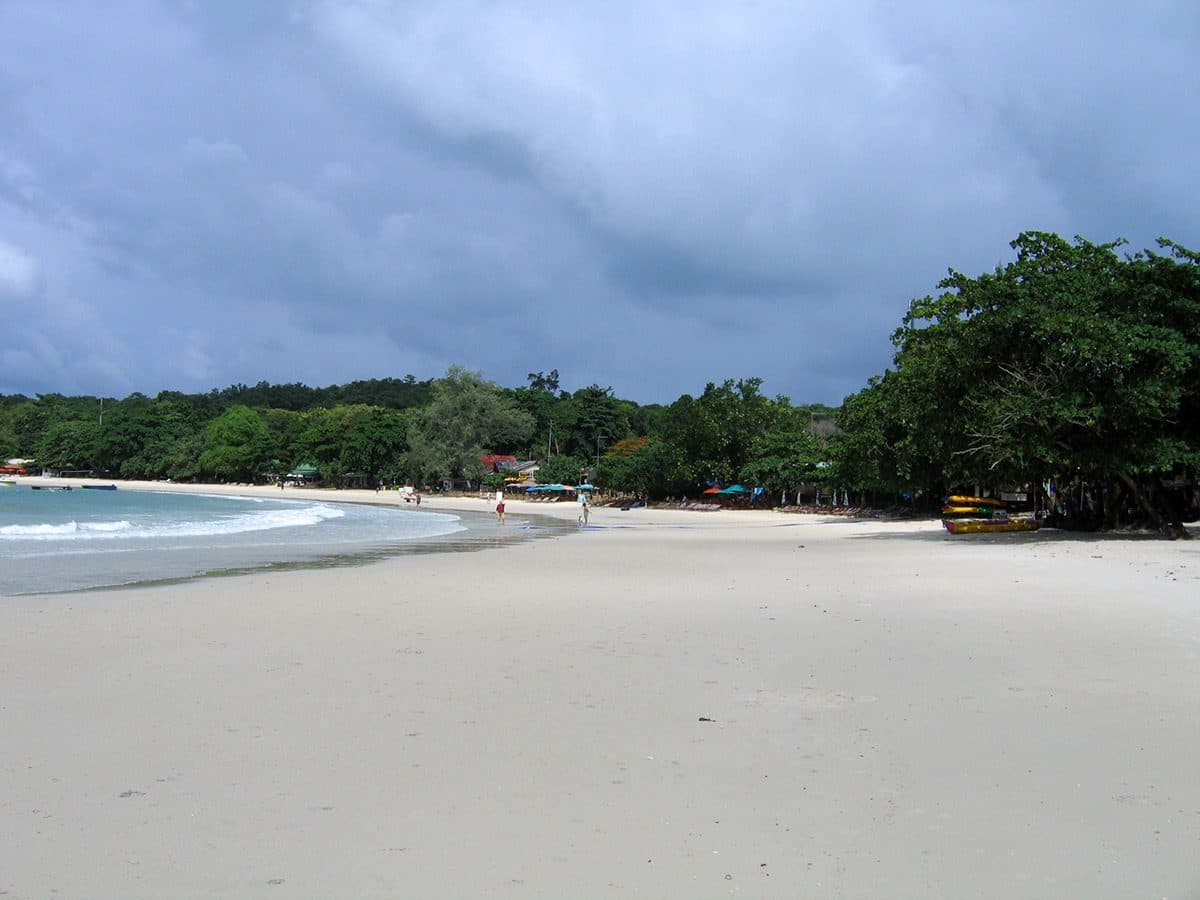
Photo: Ken Eckert, CC BY-SA 4.0

Short answer
Want to swim in clear water? Go to Koh Samet: it's a real island with white sand, but avoid weekends if you can. Want easy days, night markets and seafood? Go to Hua Hin: it's a town, not an island, and the water is murkier. Both are about three hours from Bangkok.
Koh Samet: the island
The brochure says
White sand, clear water, just three hours from Bangkok.
A Thai will tell you
All true. But on weekends, half of Bangkok seems to be here. Go on a weekday if you can, and walk past Sai Kaew beach to the quieter bays in the south.
Koh Samet is a small island off the coast of Rayong, and most of it is a national park. It's the closest proper island beach to Bangkok: the sand is fine and white, the water on the east-coast bays is clear enough to see your feet, and you can walk from one bay to the next along the shore.
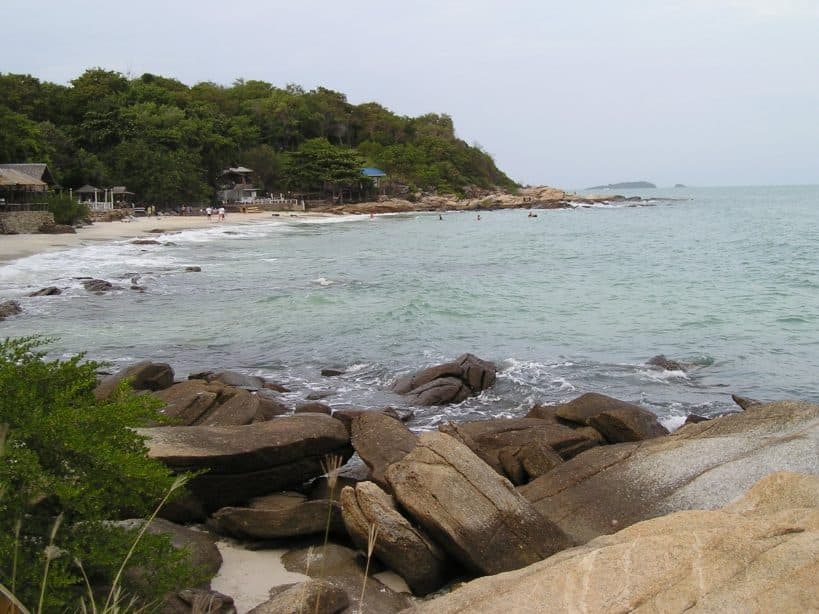
Clear water and granite rocks on the east coast.
Photo: Kereish, Public domain (Wikimedia Commons)

Getting to Koh Samet
The trip has two parts: a road trip to Ban Phe pier in Rayong, then a short boat ride to the island.
- Bus to Ban Phe
- From Ekkamai (Eastern Bus Terminal), about 3.5 hours, roughly 175–300 baht
- Slow ferry
- About 40 minutes to Na Dan pier, roughly 70–100 baht one way
- Speedboat
- About 15 minutes, roughly 150–300 baht a seat; can drop you at other beaches
- National park fee
- 200 baht for foreign adults, 100 baht for children, cash, paid on arrival
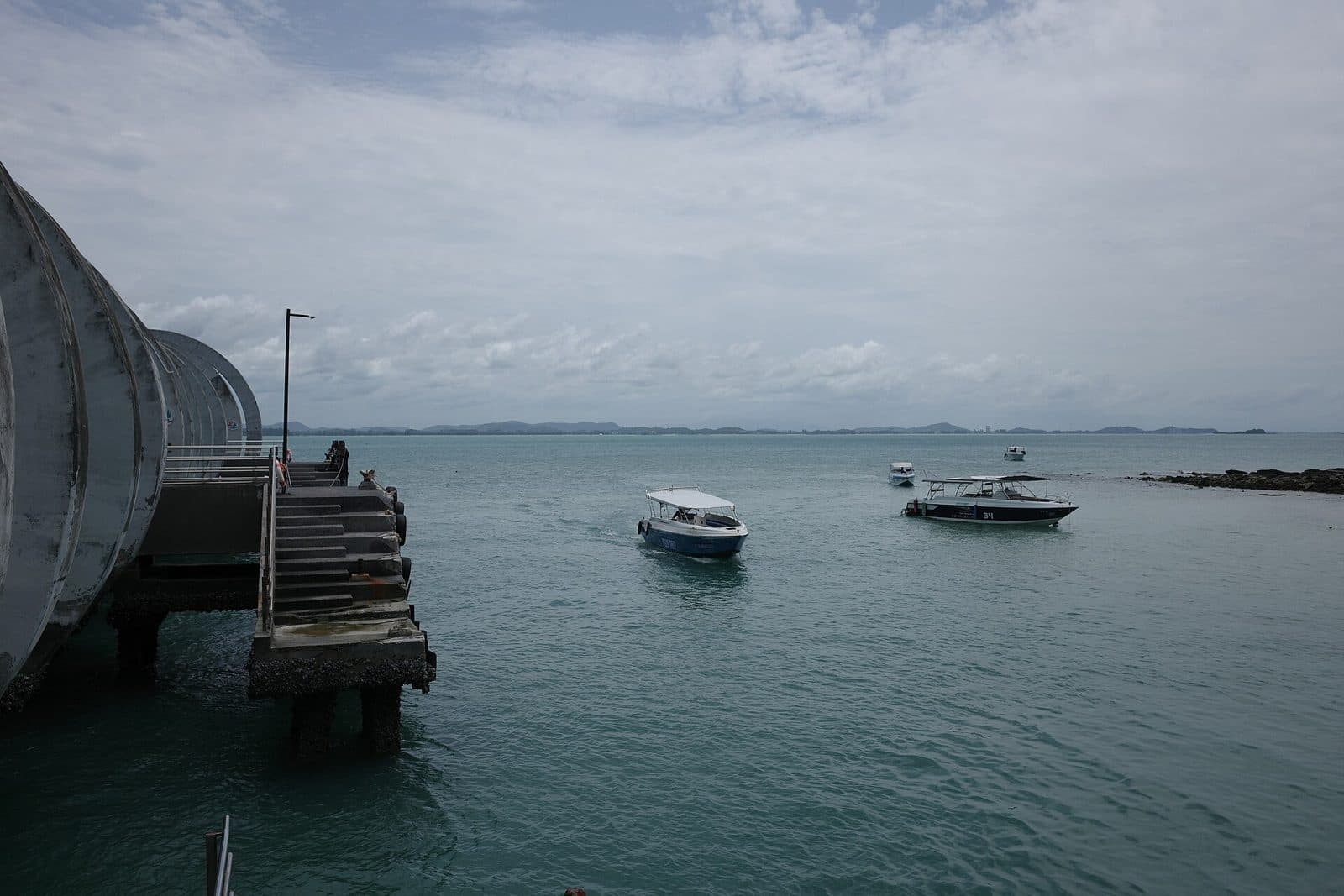
Speedboats at Na Dan pier, where most boats arrive.
Photo: Headshop5, CC0 (Wikimedia Commons)

Local tip
The last boats back to the mainland leave in the early evening. If you're heading back to Bangkok the same day, take a boat by mid-afternoon.
Which beach on Koh Samet?
- Sai Kaew: the big beach next to the pier. Lively, but also the busiest, with speedboats, jet skis and banana boats.
- Ao Hin Khok and Ao Phai: small bays with bungalows and beach bars. Good if you want some nightlife.
- Ao Wong Duean: a wide, curved beach lined with resorts. Easy and comfortable.
- Ao Thian (Candlelight Beach) and Ao Wai: further south, rockier and much quieter.
- Ao Prao: the only big beach on the west coast, and the place for sunsets.
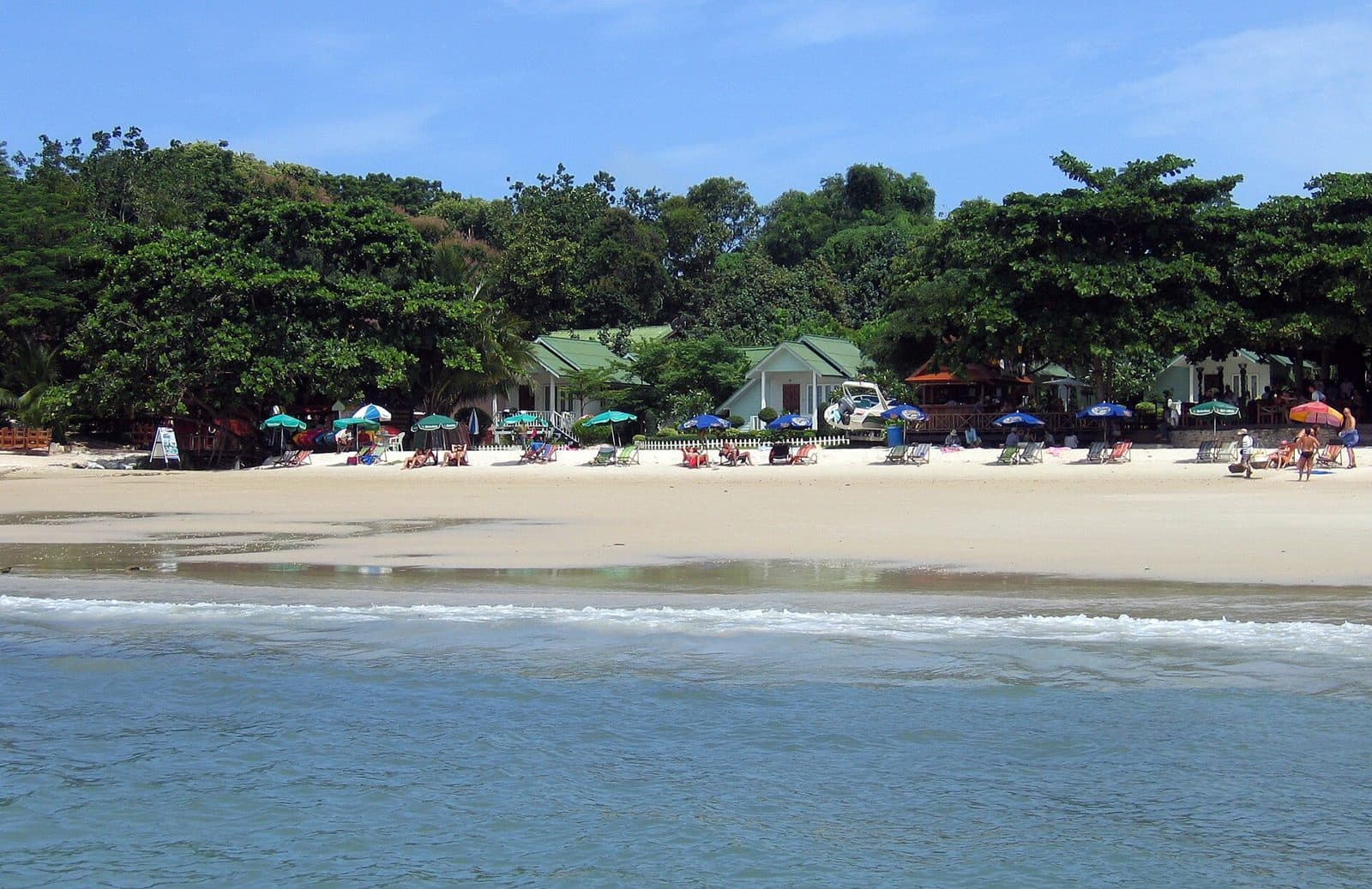
Bungalows and umbrellas at Ao Phai.
Photo: Bjørn Erik Pedersen, CC BY-SA 3.0

There are no private cars on the island. Shared green songthaews (pickup trucks with benches) cost roughly 20–60 baht a person, or 200–600 baht to hire one to yourself for the southern beaches. Scooters rent for about 400 baht a day, but the inland roads are steep and partly dirt. If you're not a confident rider, take the songthaew.
Where to stay and eat on Koh Samet
- Budget bungalow
- Under about 1,200 baht a night
- Mid-range
- About 1,200–3,000 baht
- Resort
- About 3,000–10,000+ baht
On Thai public holidays and long weekends, the good places are booked weeks ahead and prices jump. Choice is also limited because the island is small, so book before you go rather than turning up and looking.
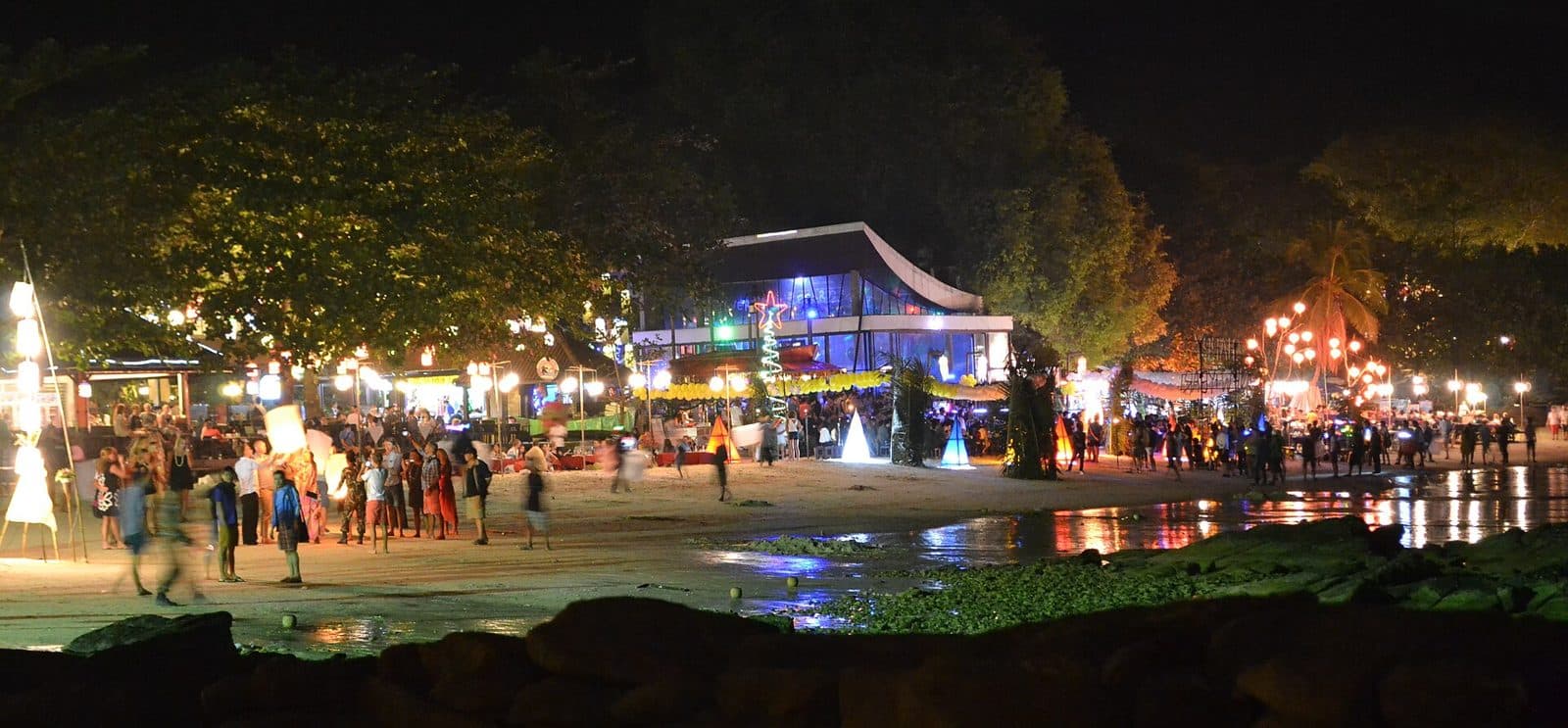
After dark, tables and lights move onto the sand.
Photo: Alex Kovacheva, CC BY-SA 4.0

In the evening, many beaches set up tables on the sand with grilled seafood, and some bars put on fire shows. Food on the island is mostly standard Thai and seafood, and a little more expensive than on the mainland, because everything comes over by boat.
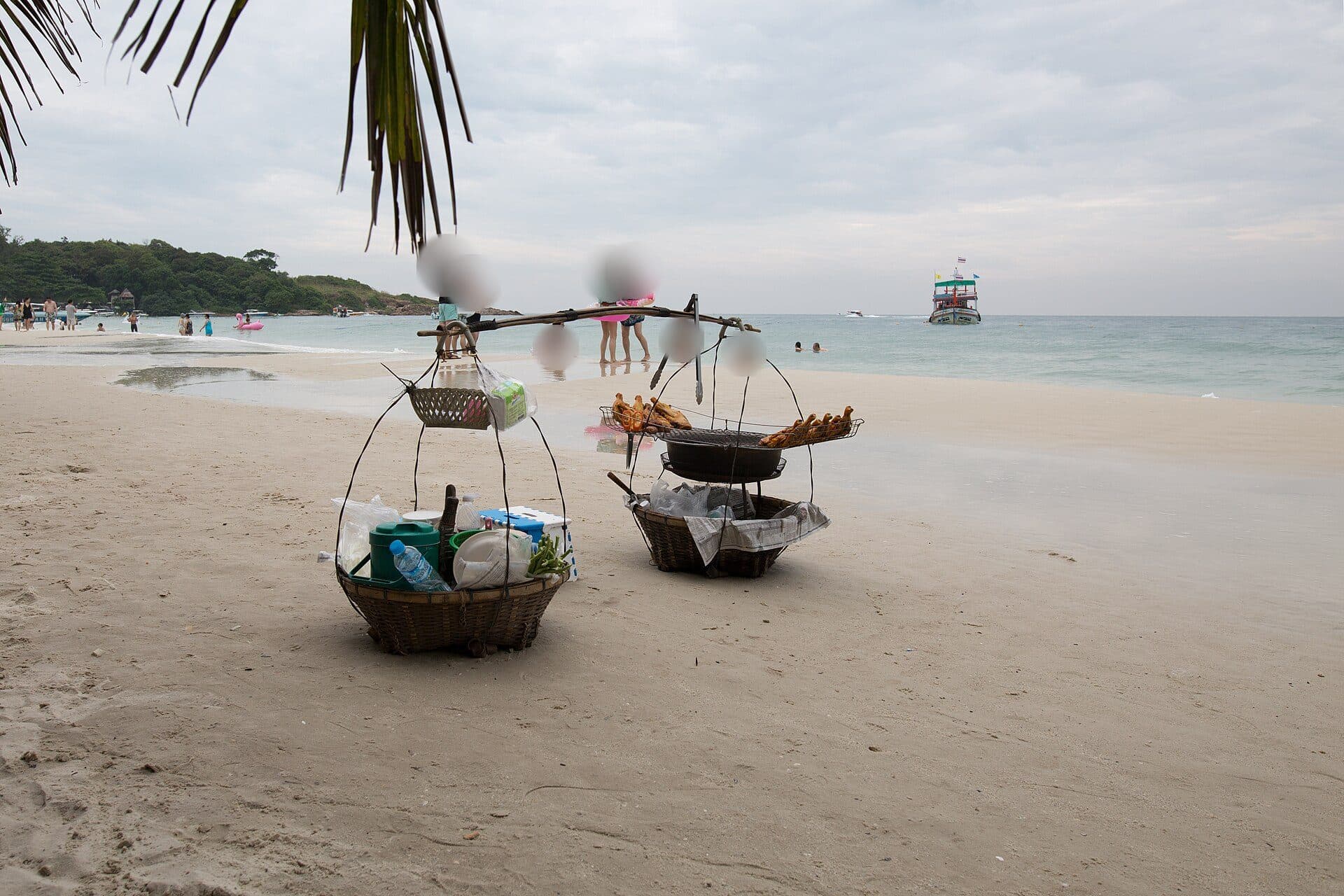
A vendor's baskets of grilled snacks, carried along the beach.
Photo: PA, CC BY-SA 4.0

The catches on Koh Samet, and the fixes
- Crowded on weekends and long holidays → go Monday to Thursday if you can.
- Sai Kaew is noisy with boats and jet skis → walk south to Ao Wong Duean, Ao Thian or Ao Wai.
- Foreigners pay a higher park fee than Thais (200 vs 40 baht) → it's the national park rate, not a scam. Keep cash ready.
- Jet ski damage disputes happen → take photos and a video all around the jet ski before you ride.
Hua Hin: the seaside town
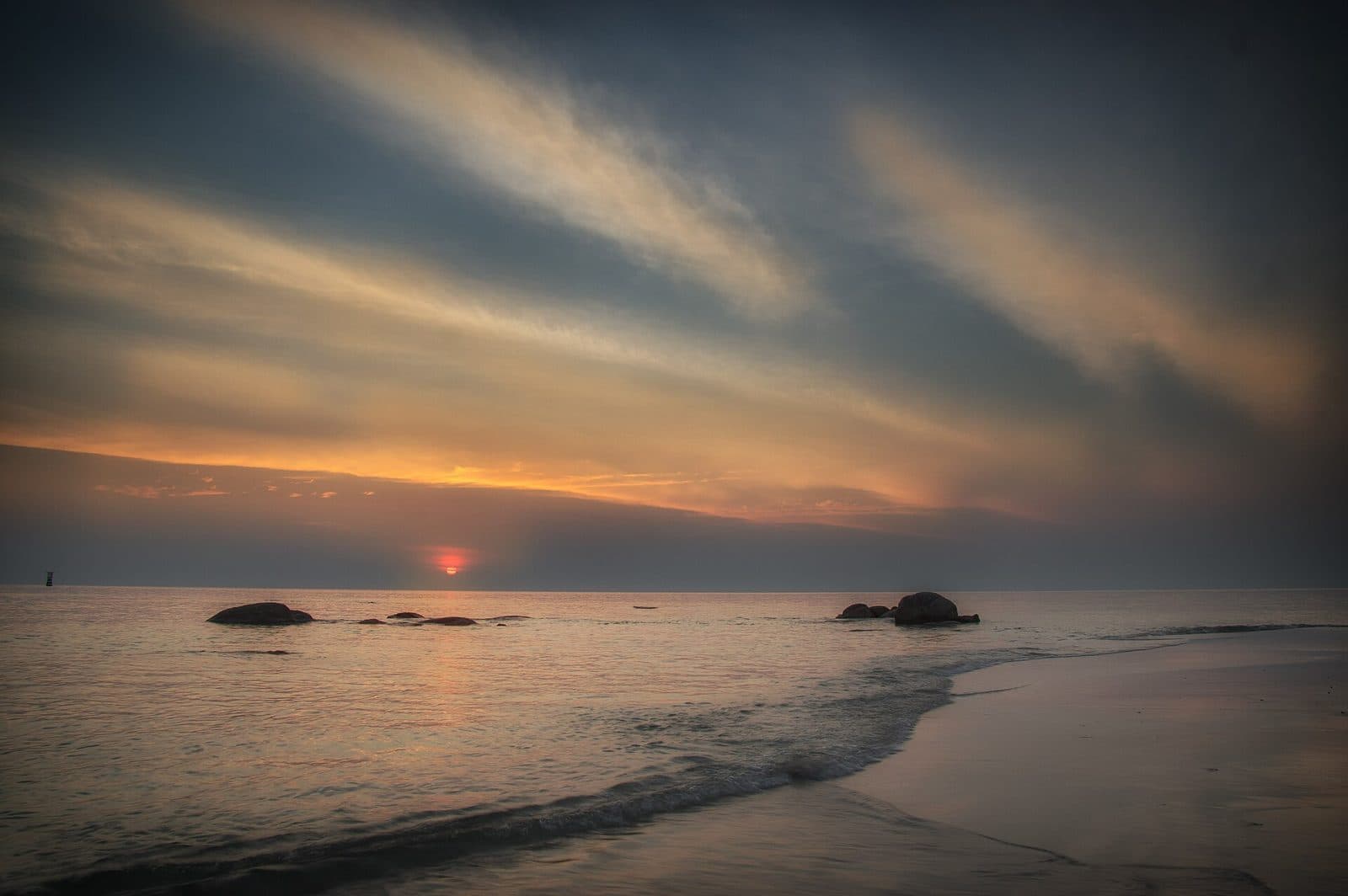
Sunrise on Hua Hin's public beach.
Photo: Bjørn Erik Pedersen, CC BY-SA 4.0

The brochure says
A classic seaside town with long, beautiful beaches.
A Thai will tell you
Great for food, night markets and slow days. But if you're hoping for clear water, you may be disappointed. Come for the vibe, not the swim.
Hua Hin is a real town on the mainland, south of Bangkok. Thai families have been coming here for weekends for about a hundred years, and it shows: it's relaxed, easy and full of good things to eat. The beach is long and flat, great for walking at low tide, with horses for rides and calm, shallow water for kids.
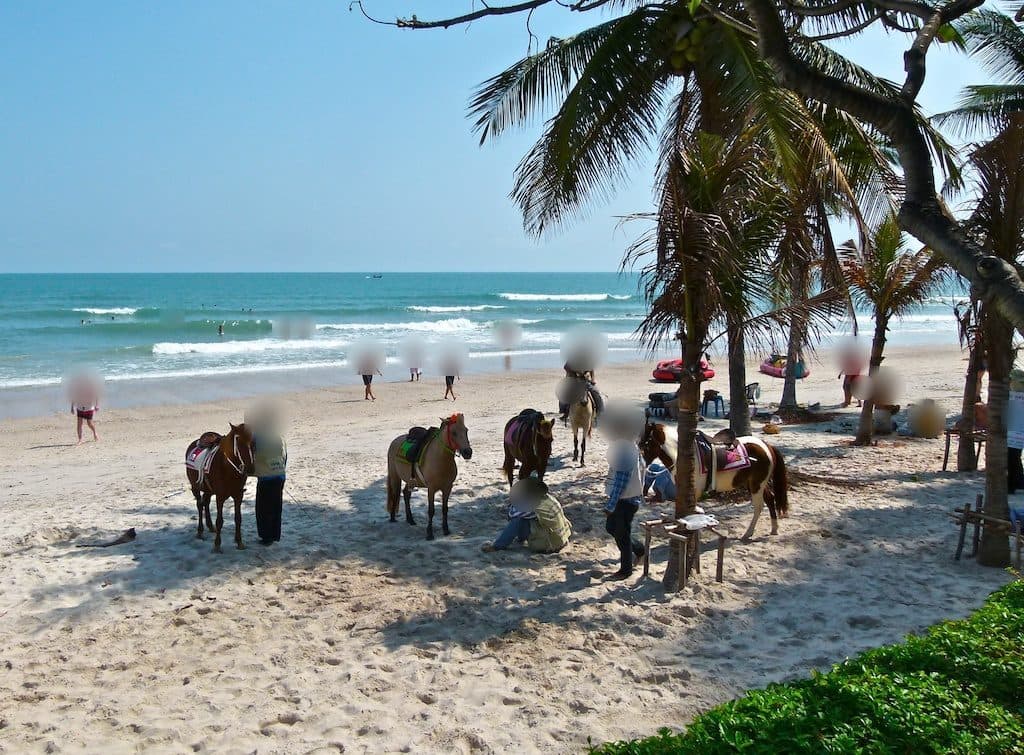
Horses for rides on the main beach.
Photo: josef knecht, CC BY 3.0

Getting to Hua Hin
No boat needed. You can go by train or by road.
- Train
- From Krung Thep Aphiwat station, about 3–4 hours. The morning express railcar is roughly 330 baht; slower trains can cost under 150 baht
- Bus or van
- From the Southern Bus Terminal (Sai Tai Mai), about 3–4 hours, roughly 200–300 baht. Traffic can add more
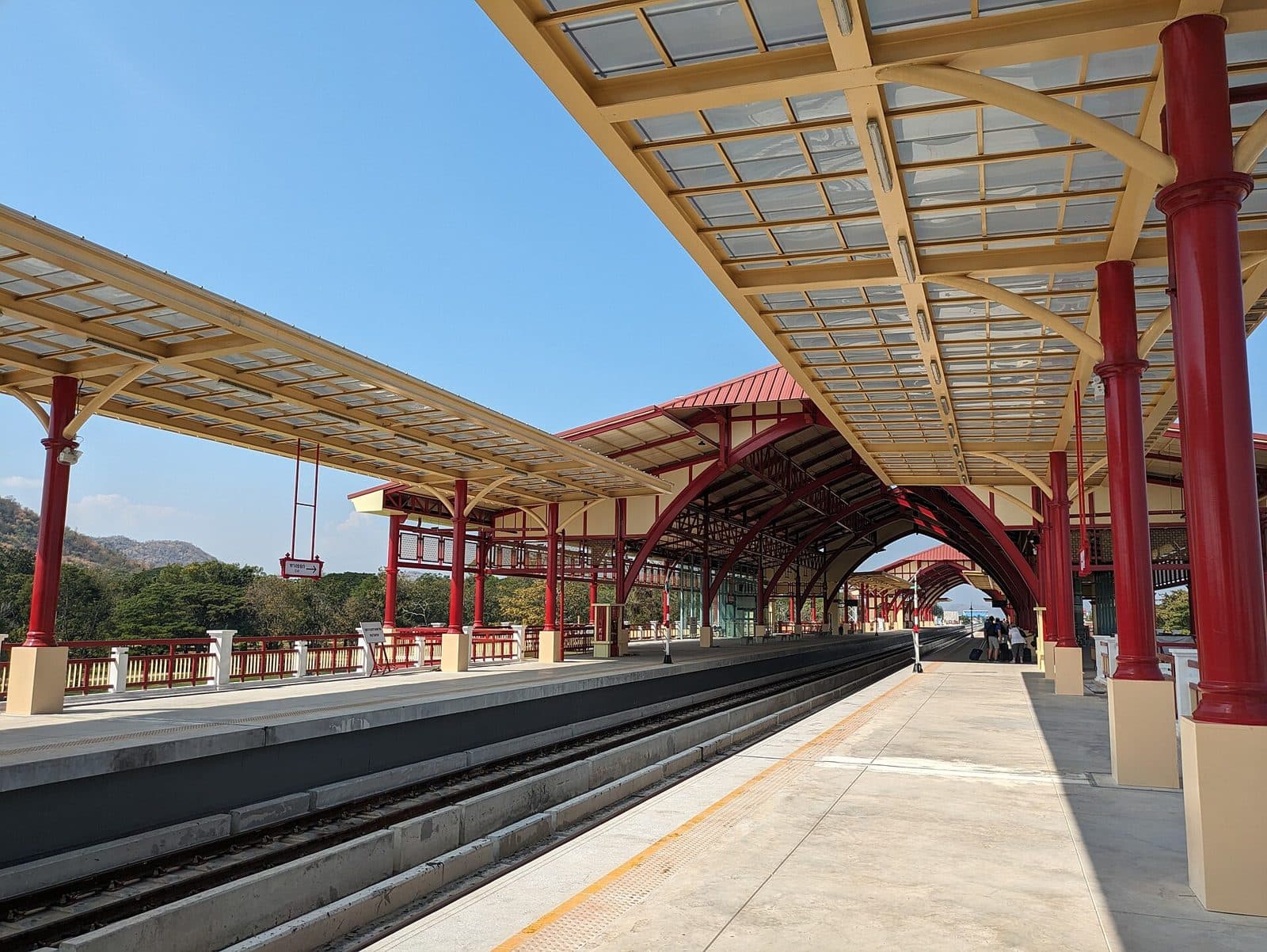
The red-and-cream platforms at Hua Hin railway station.
Photo: Suikotei, CC BY 4.0

Local tip
Seats on the morning train sell out. Book a few days ahead on the State Railway's D-Ticket website.
Markets and food in Hua Hin
This is where Hua Hin wins. Hua Hin Night Market on Dechanuchit Road opens every evening from around 6 pm, with grilled seafood, Thai street food and clothes stalls.
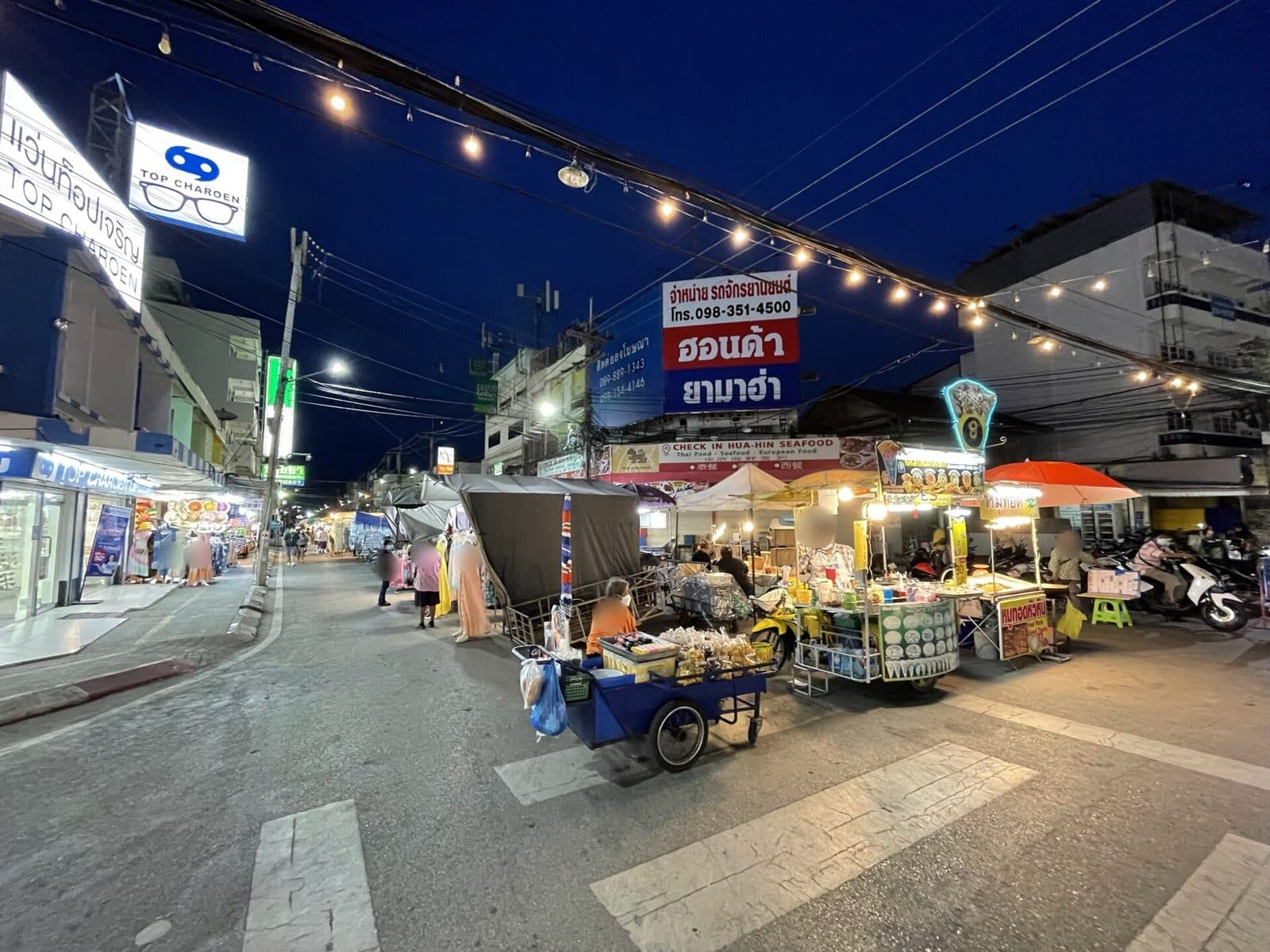
Food carts setting up at Hua Hin Night Market.
Photo: Slyronit, CC BY-SA 4.0

Cicada Market, near the south end of town, opens Friday to Sunday from about 4 pm to 11 pm: art, handmade things, live music and a food court under the trees. Tamarind Market next door is all food. Go around 5 pm, before it gets busy.
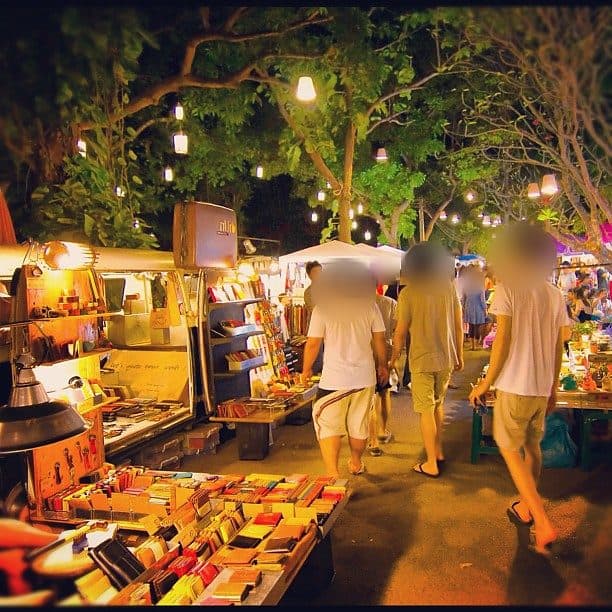
Lanterns and craft stalls at Cicada Market.
Photo: Ratana Limnararat, CC BY 2.0

For seafood with a sea view, look for the restaurants built on stilts over the beach near the old fishing pier in town. At Khao Takiab, at the south end of the beach, small seaside restaurants serve fresh clams, crab and fish at local prices.
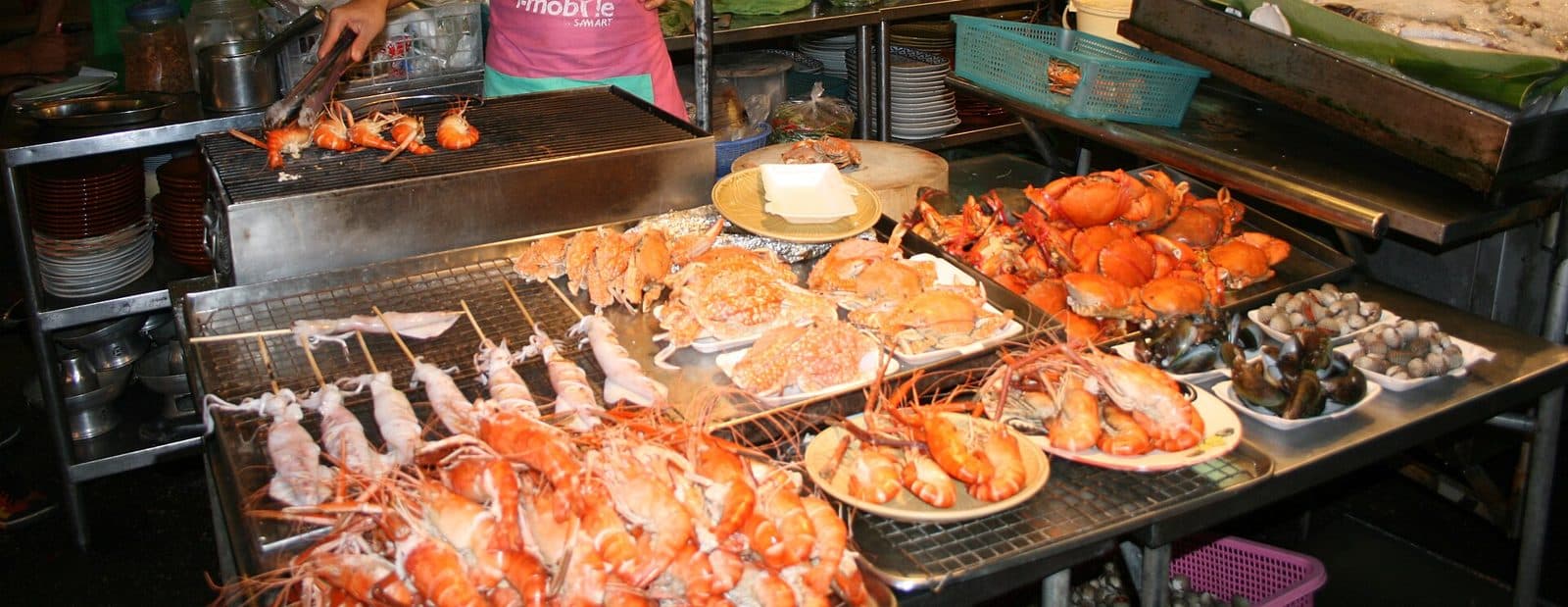
Pick your seafood, and they grill it for you.
Photo: Ian Gratton, CC BY 2.0

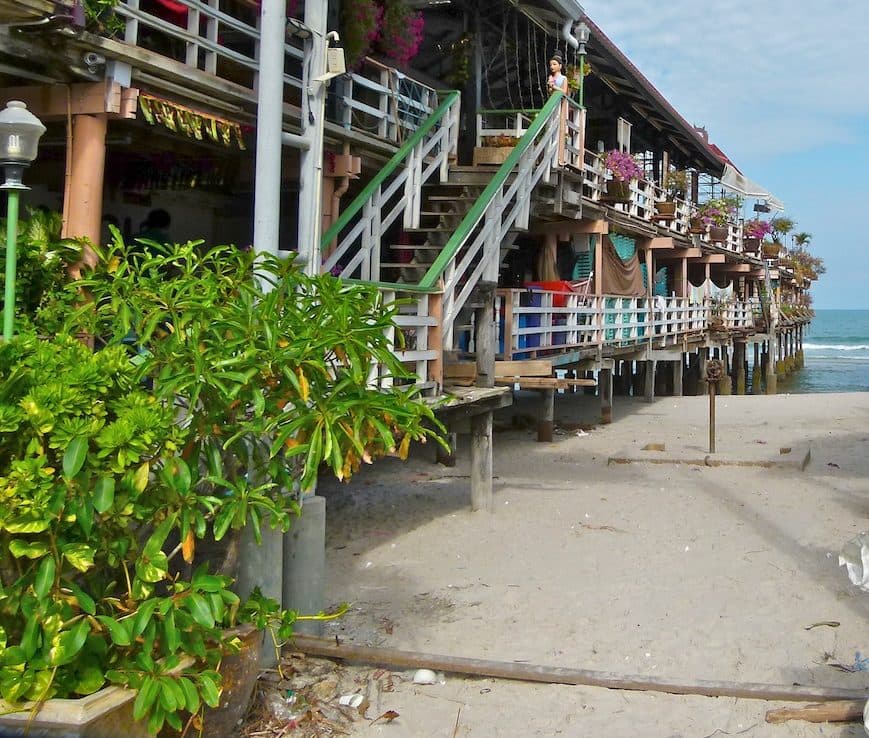
Seafood restaurants on stilts over the sand.
Photo: josef knecht, CC BY 3.0

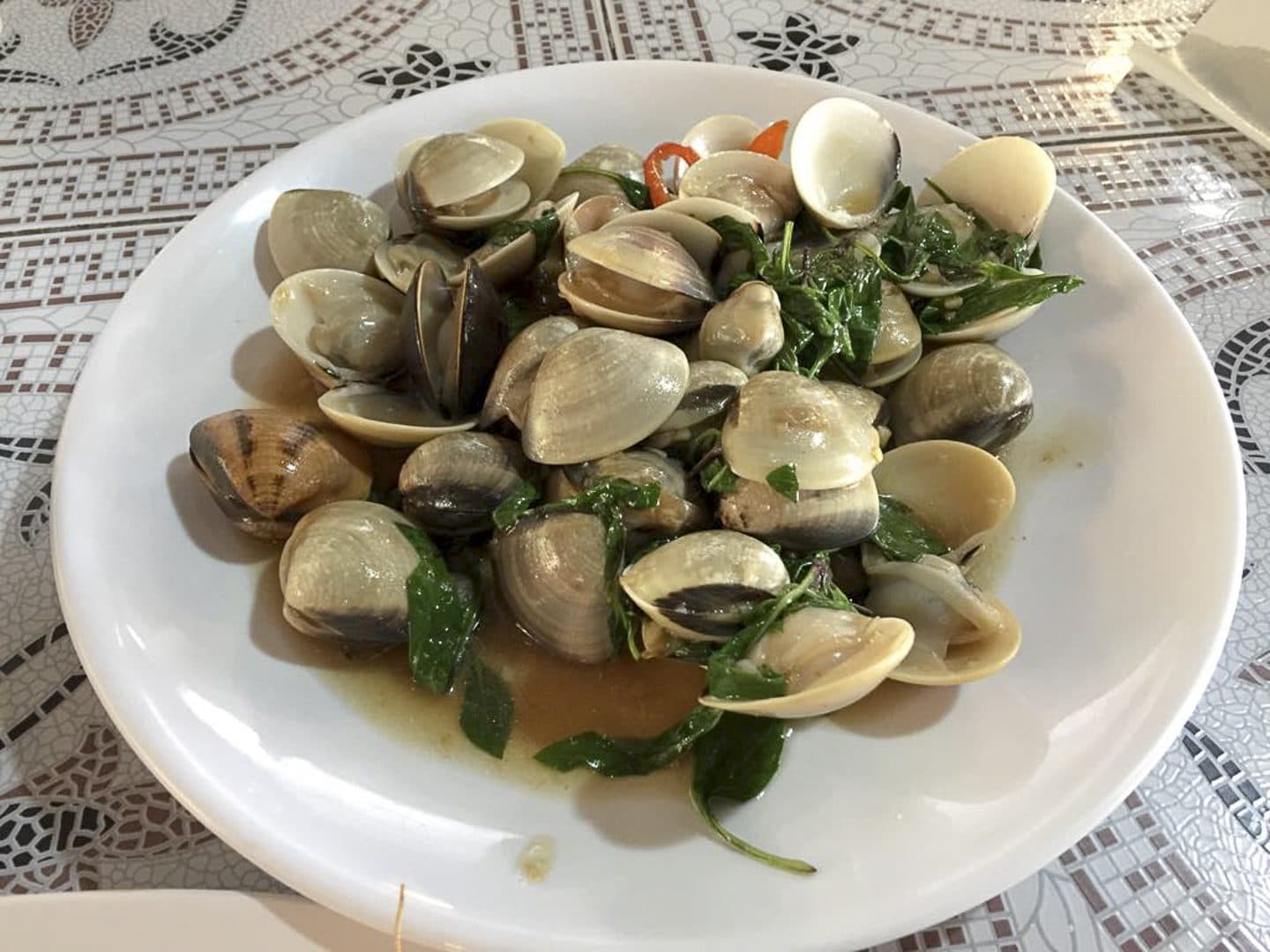
Stir-fried clams at a Khao Takiab seaside restaurant.
Photo: mmmmngai, CC BY-SA 2.0

Beyond the beach
Khao Takiab is a small hill at the south end of Hua Hin beach, with a temple on top and views back along the coast. The monkeys there will take anything that looks like food, so keep bags closed.
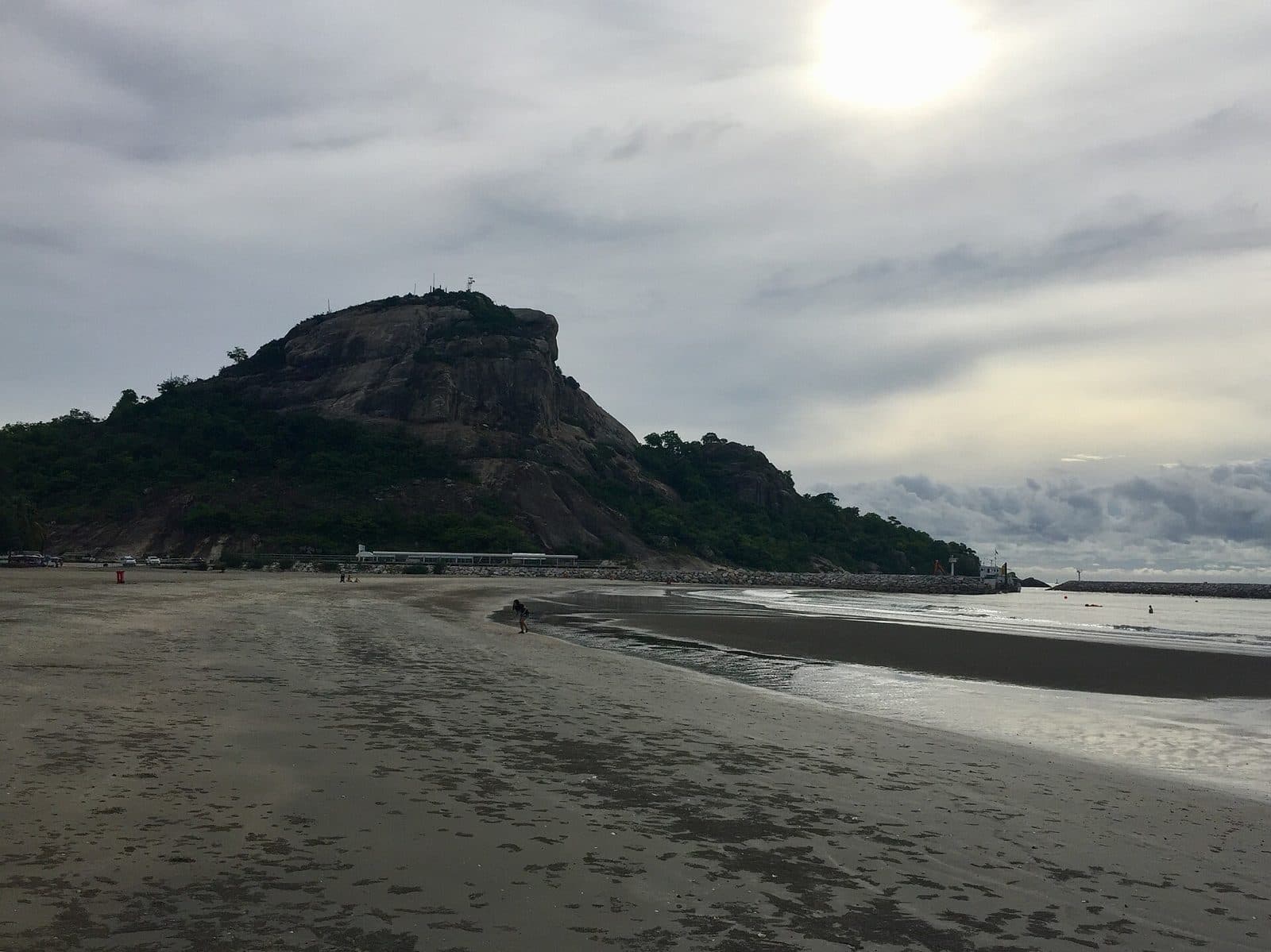
Khao Takiab at the quiet south end of the beach.
Photo: Athikhun.suw, CC BY-SA 4.0

The best day trip is Phraya Nakhon Cave in Khao Sam Roi Yot National Park, about an hour's drive south. The roof of the cave has fallen in, so sunlight pours down onto a small pavilion inside. Getting there means a steep hike over a hill, so go in the morning, wear proper shoes and bring water.
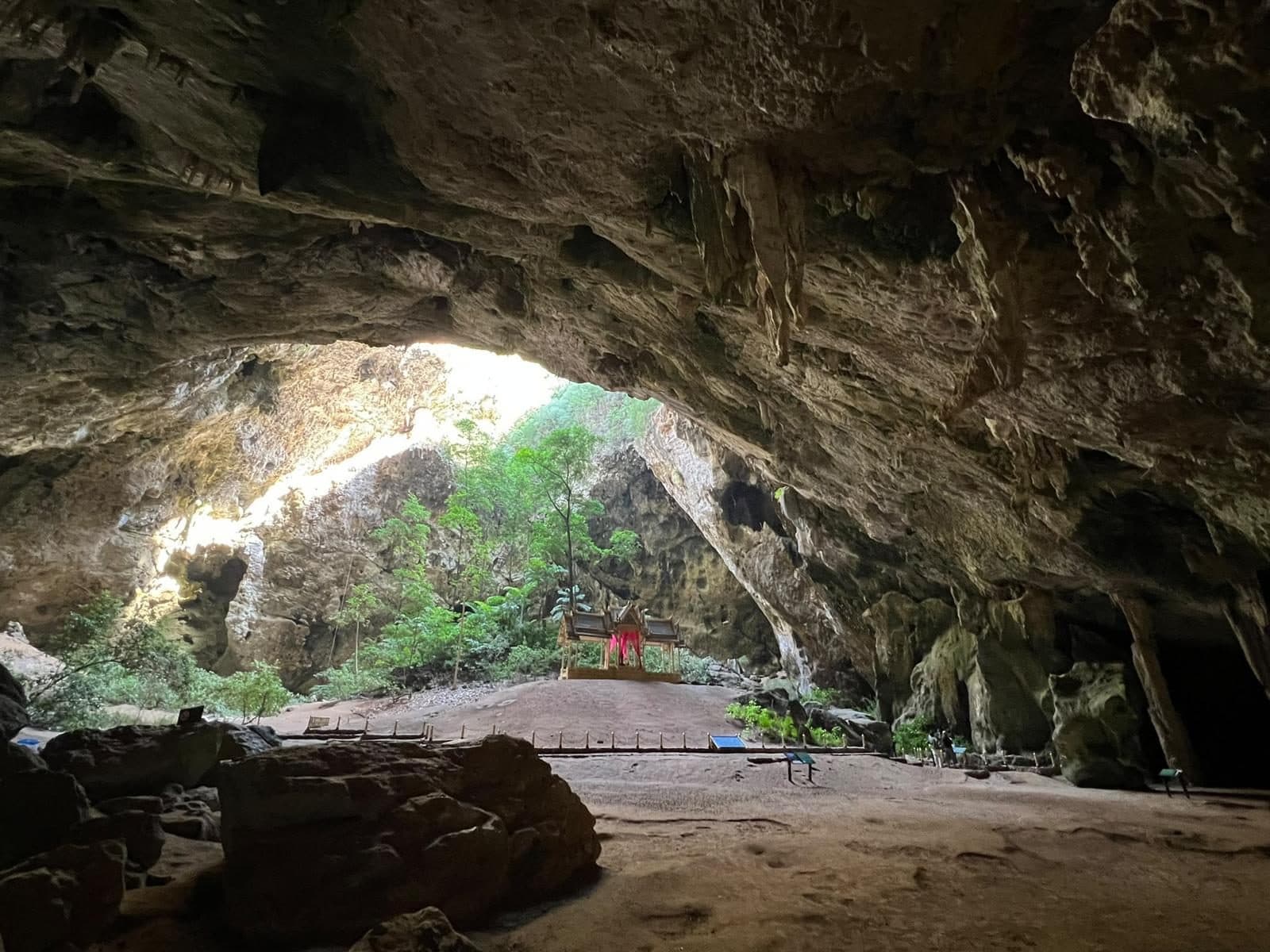
Sunlight falling into Phraya Nakhon Cave.
Photo: Ariberth, CC0 (Wikimedia Commons)

Where to stay in Hua Hin
- Guesthouse
- About 650–1,000 baht a night
- Typical hotel
- About 1,500–2,500 baht
- Beach resort
- About 3,000–8,000+ baht
Stay in the town centre if you want to walk to the night market and restaurants. Stay near Khao Takiab if you want a quieter beach. Because Hua Hin is a big town with lots of hotels, you can usually find a room even at short notice, which is not true of Koh Samet.
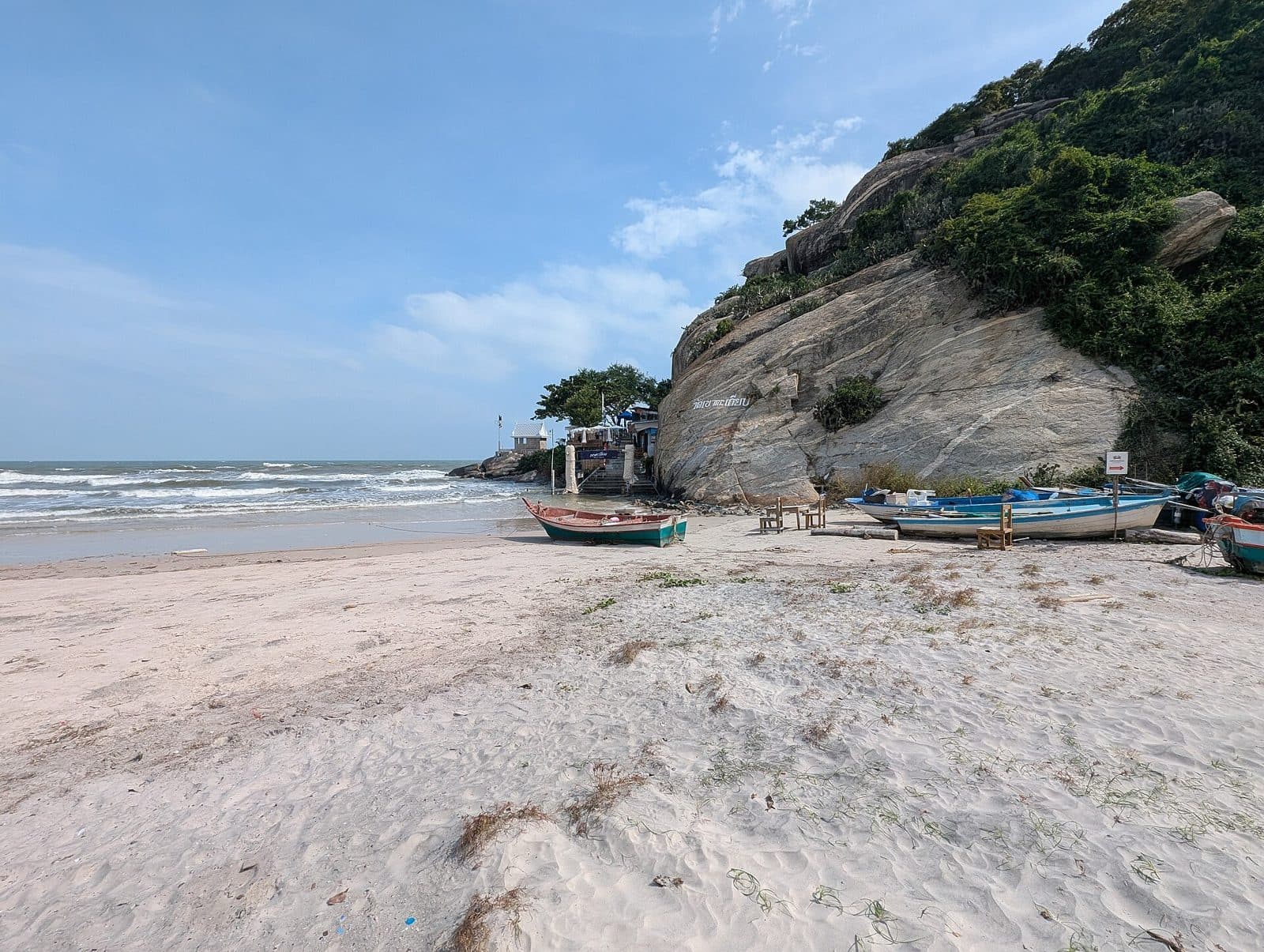
Fishing boats pulled up on the sand, Hua Hin.
Photo: Elmschrat, CC0 (Wikimedia Commons)

The catches in Hua Hin, and the fixes
- The water is murkier than on an island → come for walks, food and sunrises, not snorkelling.
- At high tide the beach almost disappears in places → check a tide table and walk the beach at low tide.
- In the rainy season, jellyfish come close to shore → ask locals before you swim, and don't swim if they say no.
- The town beach is busy with vendors → walk south towards Khao Takiab for more space.
- If you want an island or a party, it may feel too quiet → that's Koh Samet's job.
When to go
For both places, late November to February is the most reliable time: drier, a little cooler, calmer sea. Hua Hin's wettest months are usually September and October, with short, heavy afternoon showers. Koh Samet's rainy season runs roughly from May or June to October, though it gets less rain than many other Thai islands.
Local tip
Jellyfish can appear in the Gulf of Thailand, mostly in the rainy season. Some beaches have vinegar posts for stings, but not all of them are stocked. If you're stung, get out of the water and pour vinegar on the sting, then get help.
Our honest pick
- Want to swim in clear water
- Koh Samet
- Want easy days and good food
- Hua Hin
- Only free on a weekend
- Hua Hin (Samet will be packed)
- Travelling with small kids
- Hua Hin (no boat, calm shallow water)
- First trip to Thailand
- Koh Samet, on a weekday
Prices here are rough ranges from booking and travel sites, checked in October 2026. They change with the season and the day of the week, so check before you book.
Sources
- Travelfish: How to get to Ko Samet
- Thailand with Tereza: Bangkok to Koh Samet (2026)
- Thailand with Tereza: Is Koh Samet worth visiting? (2026)
- Thrive in Thailand: Koh Samet travel guide
- Destination Thailand: Bangkok to Hua Hin (2026 prices)
- Travelfish: Where to stay in Hua Hin
- Thailand Explorer: Things to do in Hua Hin (2026)
- Tripadvisor: Hua Hin Beach reviews
- The Thailand Life: Box jellyfish in Thailand
All photos are free-licence, from Wikimedia Commons. Some are edited (faces blurred, cropped). Photo credits